
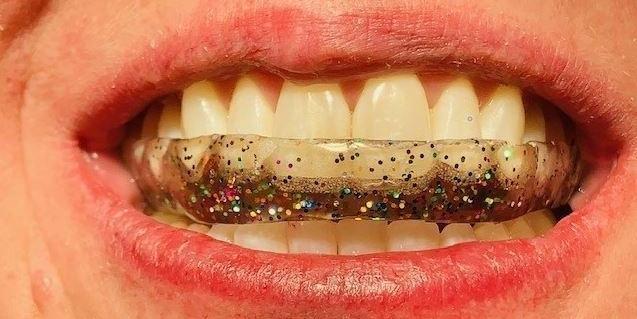
Bite Guards
What Is a Bite Guard?
 A bite guard is a clear acrylic or silicone device that covers either your upper teeth or your lower teeth. Most people wear one over their upper teeth. There are many names for these devices: “Occlusal splint,” “nightguard,” “bite splint,” or “mouthguard.” Mouthguards are usually worn by athletes during sports to prevent injury and are thick.
You can purchase a soft bite guard for nightly use at a drug store, but it is generally believed that these can trigger increase clenching activity and therefore increase muscle soreness. At Hakala Family Dentistry, we make hard acrylic bite guards, also called “occlusal splints.” These are designed to spread an equal amount of pressure over all teeth and also keep the jaw muscles from clenching fully so that the teeth are protected from full bite force, and the muscles are less strained.
Some occlusal splints cover just a few teeth and can be used by dental specialists for diagnosing or wearing to treat jaw joint (TMJ) issues.
Why Use a Bite Guard?
 The main reason to wear a bite guard is to prevent cracking and breaking of teeth. People are living longer and keeping their teeth longer, too. These are wonderful facts. But, as teeth age, they get more brittle and prone to breaking, more so if the teeth have had large fillings. Teeth with root canal treatment can be especially brittle. We have seen an increase in molars that have to be extracted due to root fractures, and wearing a bite guard helps prevent these cracked roots.
If you have had extensive veneers and crowns, bite guards can help protect these ceramic restorations from breaking, thus protecting those beautiful pearly whites that you invested in.
If your dentist notes a lot of wear of your natural teeth and breaking down of crowns and fillings, you definitely would benefit from using a bite guard. Because the wearing down of teeth is so gradual and occurs over many years, you may not be able to recognize that they are worn down, but your dentist will notice it.
Another reason people wear bite guards is to decrease muscle soreness from nighttime clenching or grinding. Almost everyone clenches at some time during sleep, even though they are not aware of it.
Some people clench or grind a great deal, and their family members let them know. The cause of this clenching and grinding can be a nervous tendency that is increased by stress. Certain medications can increase this tendency, especially selective serotonin reuptake inhibitors, or SSRIs, which are commonly taken for depression and anxiety.

What Is Bruxism?
The Oxford Dictionary defines bruxism as “involuntary habitual grinding of teeth, typically during sleep.” Who bruxes? Everyone, though some people brux more than others. In the dental field, we refer to people who grind heavily in their sleep as “bruxers.” Bruxers are more prone to show heaving wearing of their teeth, break their fillings and chip porcelain off of crowns, and often have very thick jawbones. Bruxing is like exercise for jaws and can increase jaw bone density and thickness.
Who Should Wear a Bite Guard?
Almost all adults can benefit from using a bite guard, especially those who are bruxers, have large fillings, or a lot of crowns and bridges. Some people wear their bite guard only during periods of stress, and others need to use them every night. If you have had a lot of dental treatment, we do recommend that you wear your bite guard every night.
Ask us if you should be wearing a bite guard!
