
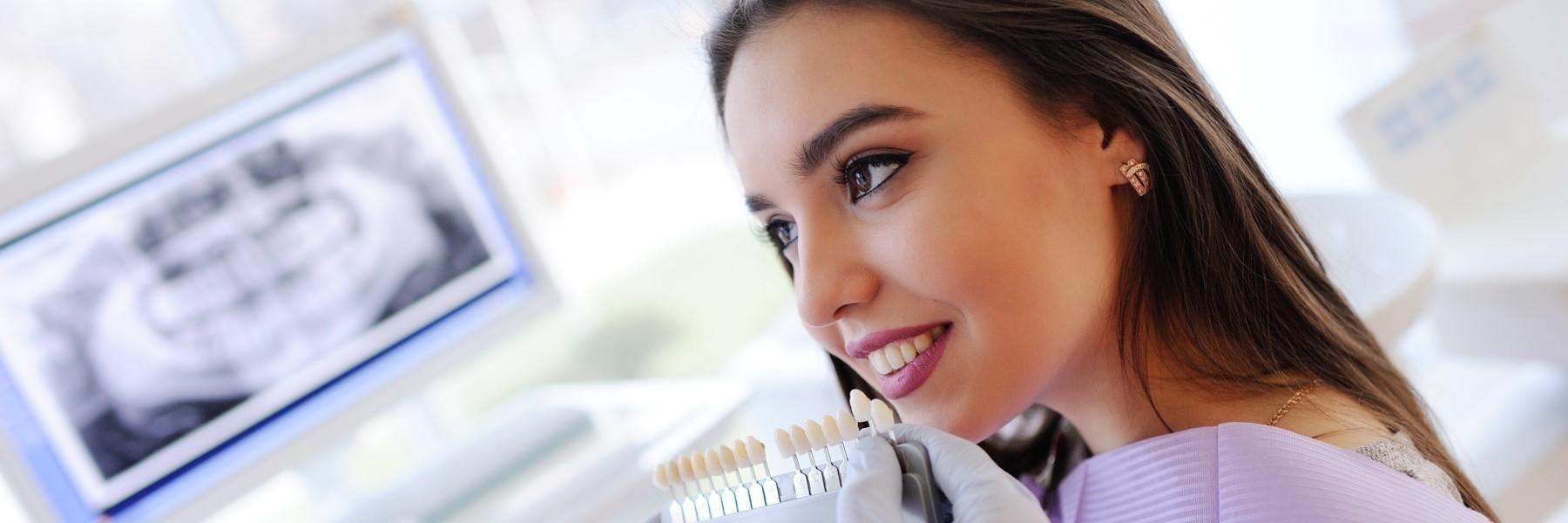
Teeth Bleaching
Teeth whitening, or "bleaching,” products brighten teeth that have yellow or brown stains caused by food, tobacco use, injury, or aging. Most bleaching products are effective and come in a wide range of strengths.
White fillings and crowns and the root surfaces of teeth will not lighten with bleach, but natural tooth enamel will lighten. The bleach products pull color out of the tooth enamel, similar to bleach water removing tea stains from a tablecloth. The stronger the bleach, the faster it works. Caution must be used to prevent tooth enamel from becoming translucent and greyish due to over-bleaching.
What Is Power Bleaching?
In-office bleaching is also called "power bleaching.” This is done in a dental office with a protective covering on gums so that the gum tissue doesn’t get burned. Typically a 36 percent bleach gel is placed on the enamel, and sometimes a light is shined on the teeth. It is important that the teeth be checked first and all cavities filled so that the teeth are not damaged by the process.
Multiple appointments may be necessary to achieve the desired whiteness. It is not uncommon to have temporary sensitivity to cold after power bleaching. Many people choose to start their teeth bleaching in the dental office with this procedure and then continue to whiten their teeth with trays at home.
Each in-office bleaching visit is about 90 minutes long, and we can provide entertainment via Netflix, or you can listen to music during the visit. Anesthesia (numbing) is not necessary, and you can eat normally afterward.
Teeth Bleaching with Trays at Home
We also offer custom-fitted bleach trays for at-home use.
Impressions are made at the dental office so that flexible custom-fit clear trays can be made for covering the teeth. The patient receives several containers of the bleaching gel. The gel is applied to the teeth at home, using the trays, which are worn for about an hour once or twice a day. The bleach solution can vary from 10 percent to 30 percent.
The trays can be used indefinitely, allowing for ongoing bleaching or occasional touch-ups. This method is considered to be cost-effective and easy to control.
Over-the-Counter Teeth Whitening Products
Over-the-counter products include toothpastes, bleaching strips, and rinses, as well as one-size-fits-all trays. Whitening toothpastes often remove just the surface stain with mild abrasives and are easily diluted with saliva.
Whitening strips are pressed onto the teeth and can be effective over a period of time. The strengths of these products are usually around five percent, so it takes longer to get the desired whiteness. Most over-the-counter products are good for younger people or for those who already have white teeth.
A combination of in-office bleaching and custom-fitted trays is an especially effective way to achieve white teeth and then maintain the whiteness over time.
Is Teeth Bleaching Safe?
Is it safe? As long as there are no cavities in the teeth, teeth whitening appears to be safe. Countless studies have been done, and the most common side effect seems to be temporary sensitivity to cold. Most people would not be surprised to learn that almost everyone who works in the dental field in the US has bleached their teeth using trays.
To learn more about teeth whitening in Denver, contact Hakala Family Dentistry to arrange an appointment.
